Departments
🏗️ B.Tech in Civil Engineering
Civil Engineering deals with the design, construction, and upkeep of **infrastructure projects** , including buildings, bridges, roads, dams, and airports, are the core topics of a four-year undergraduate B.Tech. in Civil Engineering curriculum. It integrates engineering, physics, and mathematical concepts to address practical issues pertaining to infrastructure development. Water resources, transportation engineering, environmental engineering, geotechnical engineering, and structural engineering are among the topics covered by students in this curriculum.
Both academic knowledge and hands-on training via internships and lab work are part of the program. Graduates with a B.Tech in Civil Engineering are prepared to tackle the difficulties of organizing, creating, and carrying out construction projects while guaranteeing cost-effectiveness, sustainability, and safety. Civil engineers frequently work for government organizations, construction companies, or design consultancies. This topic is crucial to both societal advancement and economic prosperity since it provides a wide range of professional options in infrastructure planning, urban development, and catastrophe management.
Total Intake: 60
Our Vision
The vision of a B.Tech in Civil Engineering program typically emphasizes developing highly skilled, innovative, and responsible engineers who are capable of addressing global challenges through **sustainable infrastructure solutions**. It aims to create professionals who can design, build, and maintain structures that improve the quality of life while preserving the environment.
- **Excellence in Engineering Education:** To provide students with a strong foundation in civil engineering principles, technology, and problem-solving skills.
- **Sustainability and Innovation:** To encourage creative solutions that promote environmental sustainability, energy efficiency, and the responsible use of resources in construction and infrastructure development.
- **Global Competence:** To prepare graduates who are capable of working in diverse cultural and economic settings, contributing to the global infrastructure needs with cutting-edge knowledge and practices.
- **Ethical Responsibility:** To instill a sense of ethical responsibility, ensuring that graduates contribute to the safety, welfare, and well-being of society in all their professional endeavors.
- **Lifelong Learning:** To foster a culture of continuous learning, enabling graduates to stay abreast of technological advances and evolving industry trends.


List of various labs of Civil Engineering
- Concrete Technology Laboratory and Construction Materials Laboratory
- Geotechnical/Soil Laboratory
- Transportation Laboratory
- Surveying Lab
- Remote Sensing And GIS Laboratory
- Project Engineering Lab
- Mechanics of Fluid Lab
1. Concrete Technology Laboratory and Construction Materials Laboratory
Concrete Technology Laboratory:
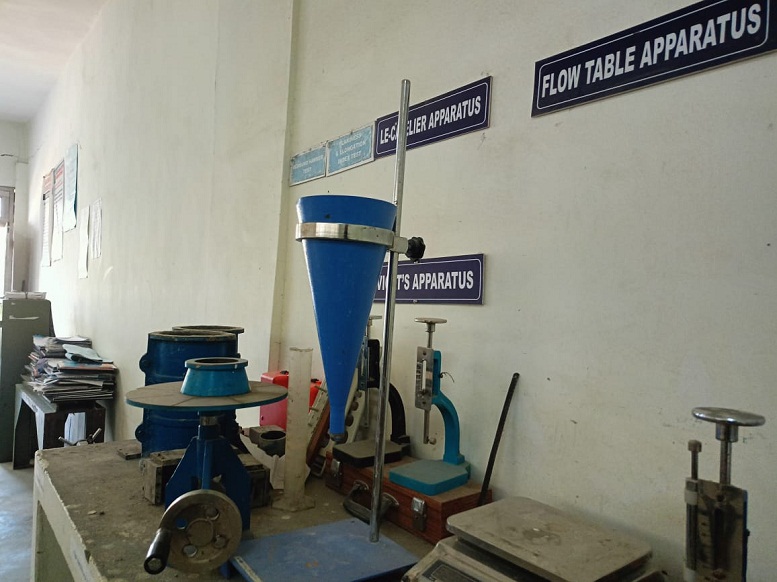
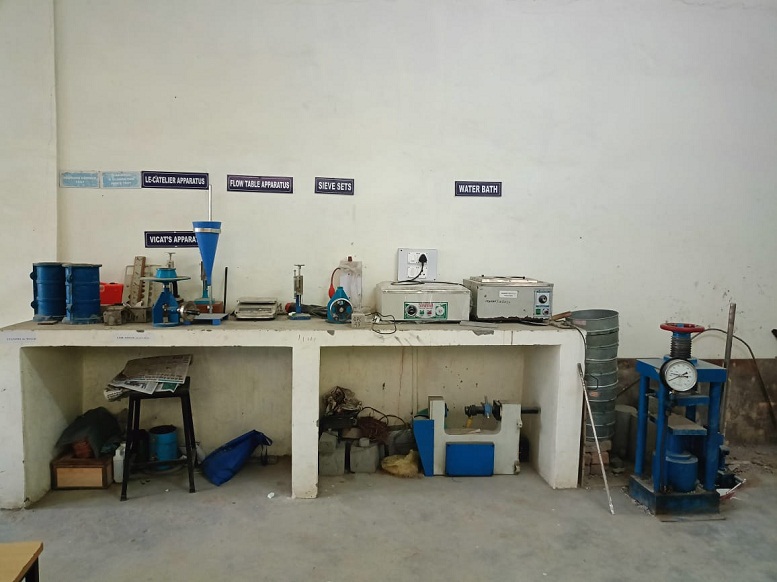
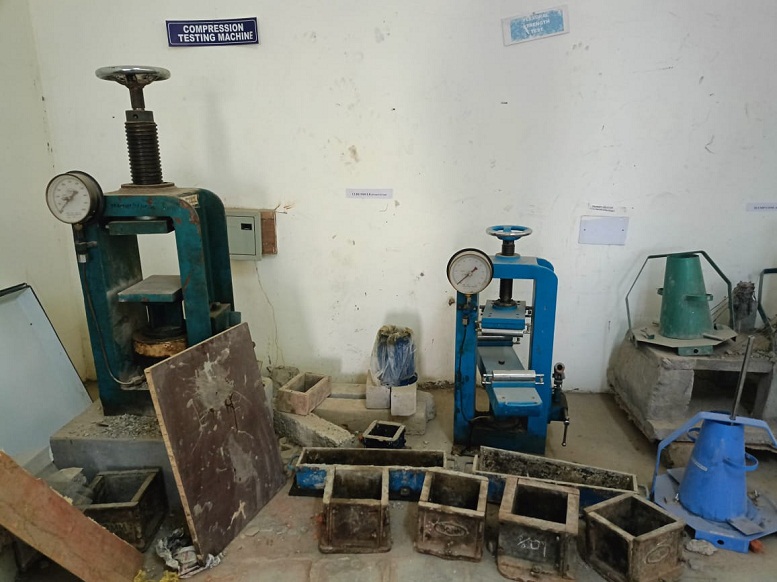
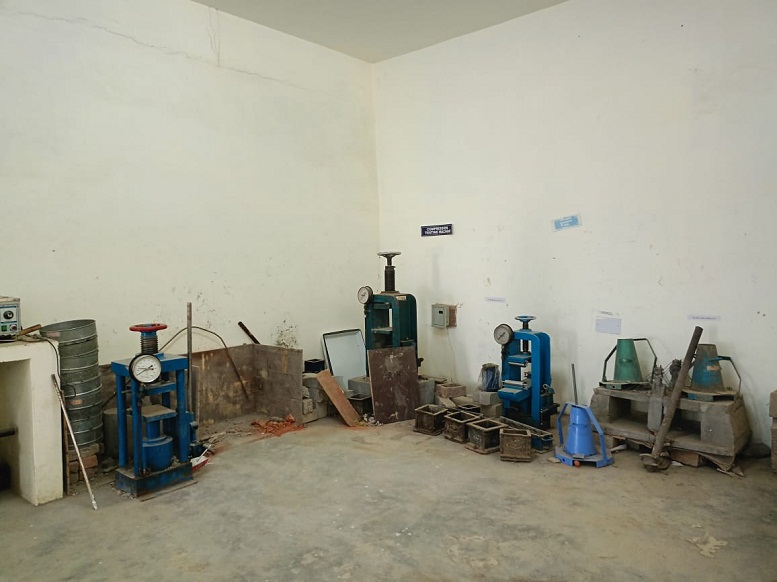
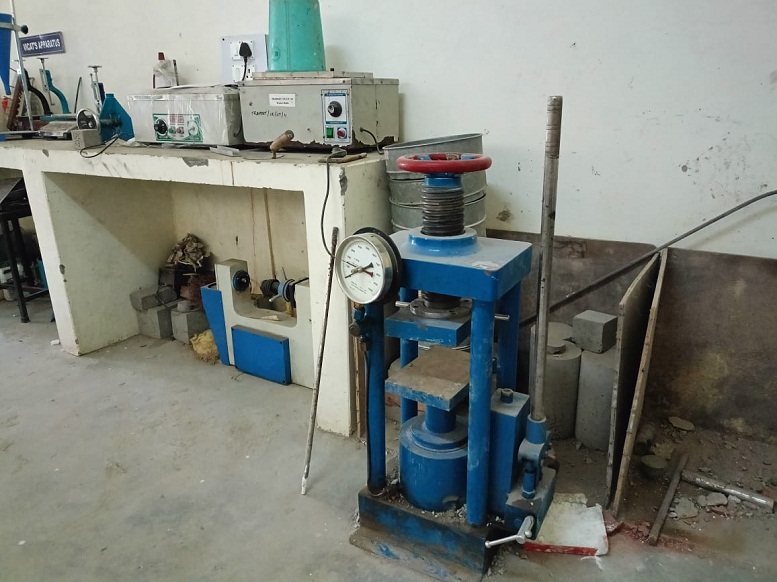
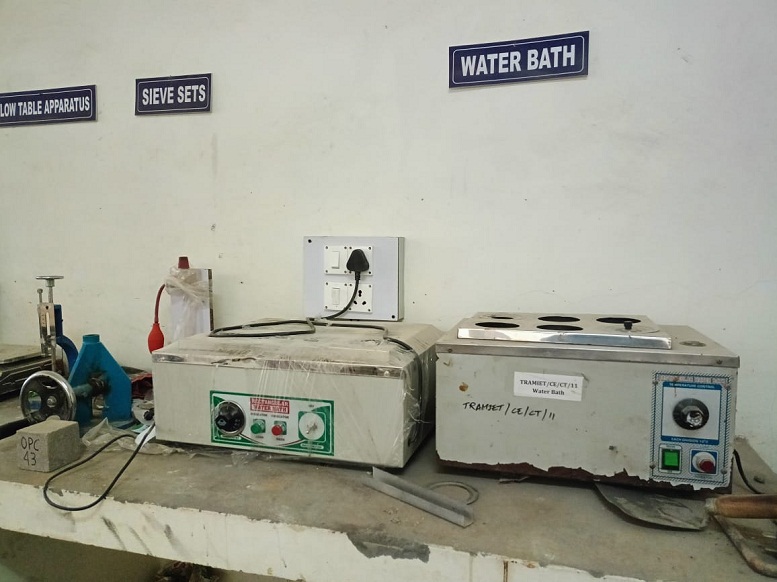
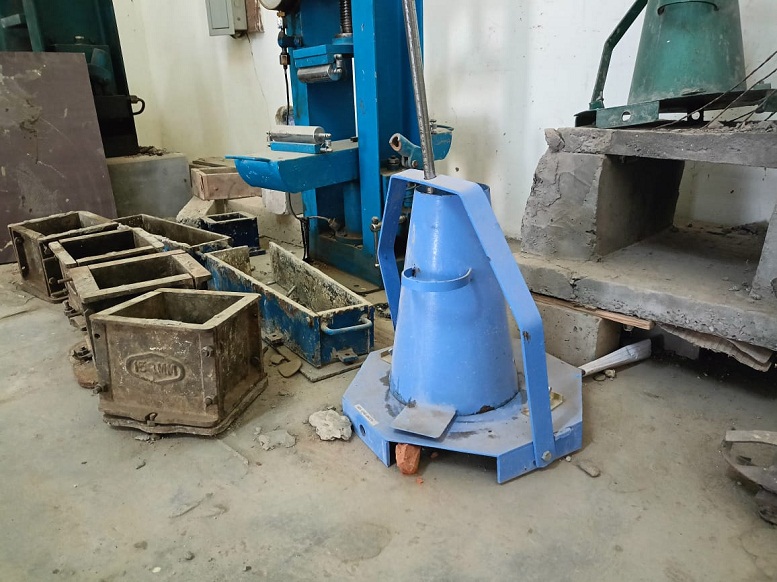
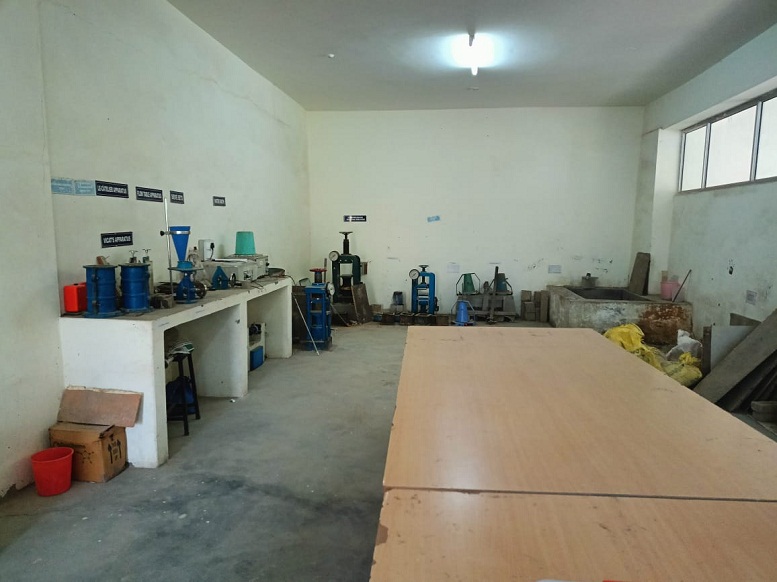
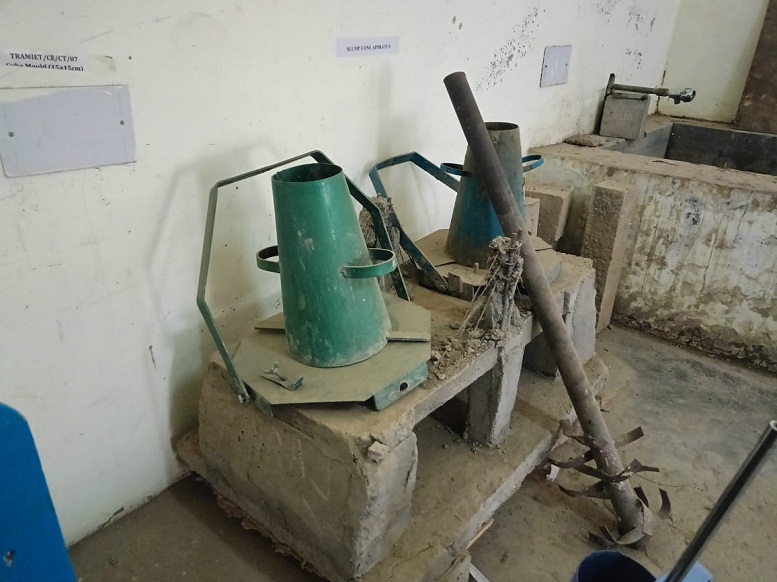
The Concrete Technology Laboratory provides a modern space for testing and analyzing concrete to guarantee strength and durability in construction projects. Equipped with sophisticated tools, it offers students practical experience in concrete mixing, performance evaluation and longevity assessment. The lab is actively engaged in research on innovative concretes, including lightweight and high-performance types.
Objectives include:
- Understanding the properties of fresh and hardened concrete.
- Analyzing the effects of mix proportions on concrete performance.
- Learning about testing methods such as **slump test, compressive strength test** , and workability tests.
- Evaluating the impact of additives and admixtures on concrete properties.
- Investigating the behavior of concrete under various environmental conditions (e.g., high temperatures, moisture)
Outcome:
- Practical Skills: Students gain hands-on experience in testing and analyzing concrete, which prepares them for real-world construction and quality control roles.
- Improved Concrete Design: Students learn how to optimize concrete mix designs to meet the requirements of strength, durability, and cost-effectiveness.
- Understanding of Material Behavior: Students understand the relationship between different materials and how they contribute to the overall performance of concrete in construction.
- Innovation: Exposure to advanced techniques like high-performance concrete, self-healing concrete, and sustainable concrete solutions
The Construction Materials Laboratory is dedicated to the thorough examination of essential building materials like cement, aggregates, bricks, and metals. It delivers hands-on training in material testing and quality evaluation to support efficient and sustainable construction. Research focuses on improving material properties and exploring new, resilient material options for infrastructure development.
Objectives include:
- Testing the mechanical, thermal, and chemical properties of construction materials.
- Understanding the behavior of different construction materials under load, stress, and environmental conditions.
- Evaluating the suitability of various materials for different construction projects.
- Learning about sustainable and eco-friendly construction materials.
Outcomes:
- Material Selection: Students are equipped with the knowledge to select appropriate materials for specific construction needs, ensuring safety, durability, and cost-efficiency.
- Quality Control: Students develop skills to conduct quality assurance tests on materials, ensuring compliance with standards and specifications.
- Sustainability: Exposure to alternative, sustainable materials and methods for reducing the environmental impact of construction.
Concrete Technology Laboratory and Construction Materials Laboratory Gallery
Construction
Construction
Construction
Construction
Construction
Construction
Construction
Construction
Construction
Construction
(Click any image to view the full size in a new tab)
2. Geotechnical/Soil Laboratory
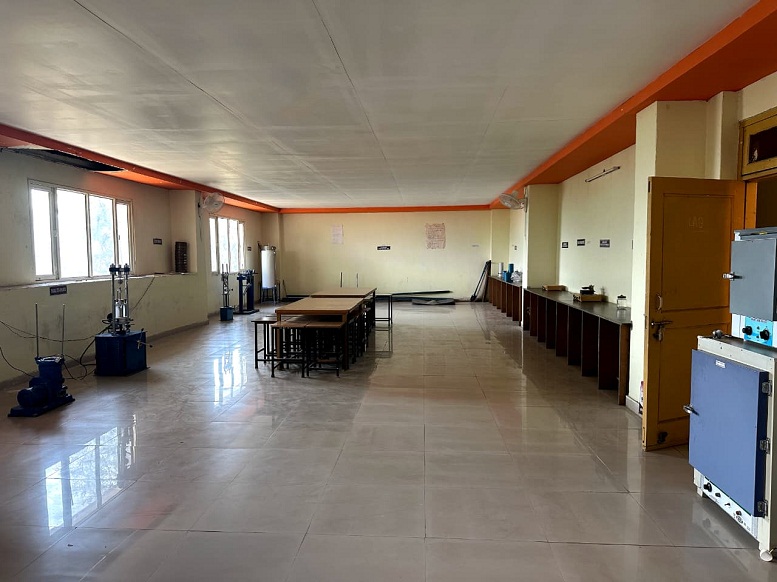
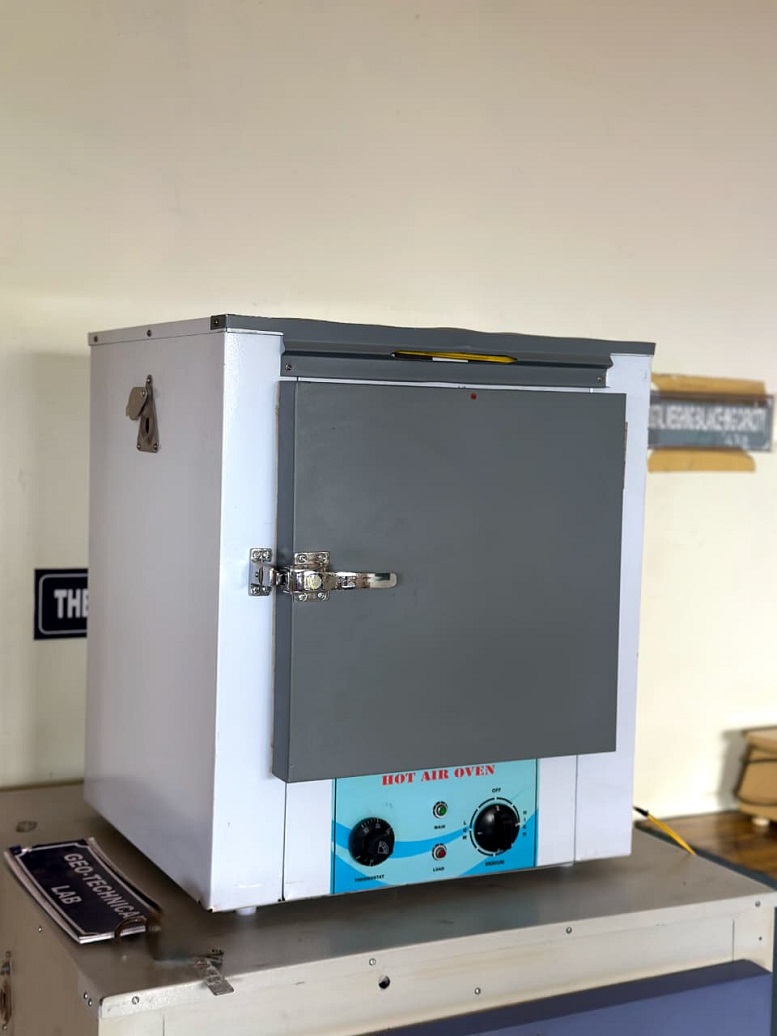
Welcome to the Geotechnical/Soil Laboratory, a state-of-the-art facility dedicated to the scientific analysis and testing of **soil properties crucial for civil engineering** and construction projects. The laboratory plays a vital role in educating future engineers by providing hands-on experience with soil classification, compaction, permeability, shear strength, consolidation, and other foundational geotechnical tests. These tests help ensure the safety, stability, and durability of structures by enabling informed design and construction decisions.
Objectives include:
- Understanding the classification and properties of different types of soil.
- Conducting tests to determine soil strength, compaction , moisture content, and permeability.
- Analyzing soil behavior under load and its effect on the design of foundations and earthworks.
- Studying soil compaction, soil stabilization techniques, and their importance in construction projects.
- Learning how to interpret and analyze laboratory test results to assess soil suitability for different construction applications
Outcomes:
Practical Skills and Knowledge:
- Soil Testing Techniques: Students gain hands-on experience in performing essential soil tests such as:
Atterberg Limits Test (for plasticity characteristics),
Compaction Test (Proctor Test),
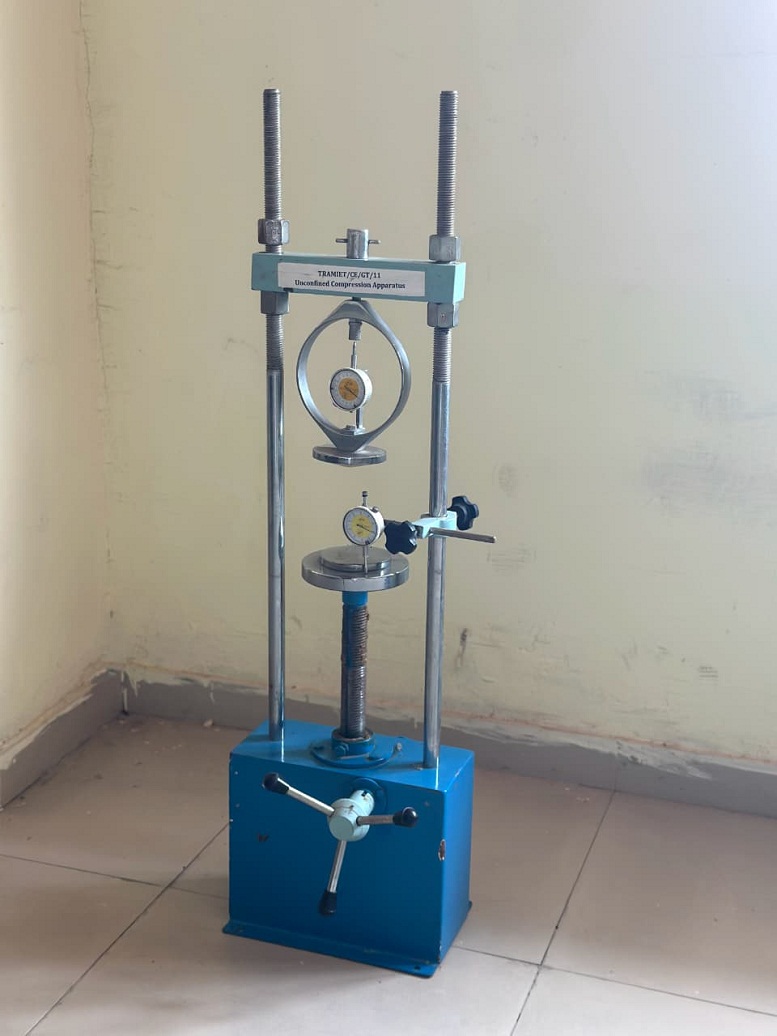
Unconfined Compression Test (for shear strength),
Permeability Test (to understand water flow through soil),
Consolidation Test (to assess settlement behavior under load).
- Soil Classification: Students will be able to classify soils based on their grain size, plasticity, and behavior under loading, which is crucial for determining soil suitability for various applications (e.g., foundations, road construction, embankments).
2. Application to Real-World Design:
- Foundation Design: Understanding soil bearing capacity and settlement behavior helps students design safer and more efficient foundations for buildings, bridges, and other structures.
- Earthworks and Slope Stability: Knowledge of soil behavior under different conditions allows for better planning and design of embankments, slopes, and retaining walls.
- Site Evaluation: Students learn how to evaluate the suitability of different sites for construction projects, assessing the risk of soil-related issues like subsidence, liquefaction, and erosion.
3. Soil Improvement and Stabilization:
- Students will learn about various soil stabilization techniques (e.g., using additives like lime or cement) to improve soil strength and reduce permeability for construction purposes.
4. Analytical and Problem-Solving Skills:
- Data Interpretation: Students learn to analyze and interpret lab results, such as stress-strain curves, soil compaction levels, and consolidation data, to make informed engineering decisions.
- Troubleshooting and Solutions: The lab helps students identify potential soil-related problems in construction projects (e.g., expansive soils or poor compaction) and find solutions to mitigate risks.
Geotechnical/Soil LaboratoryGallery

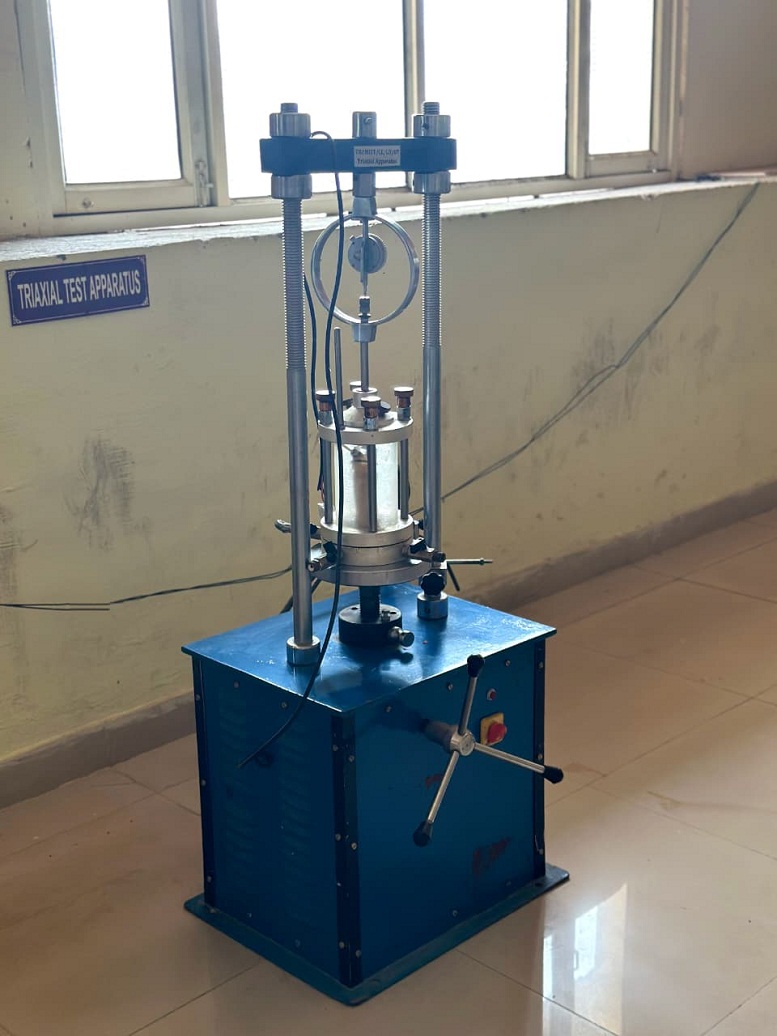
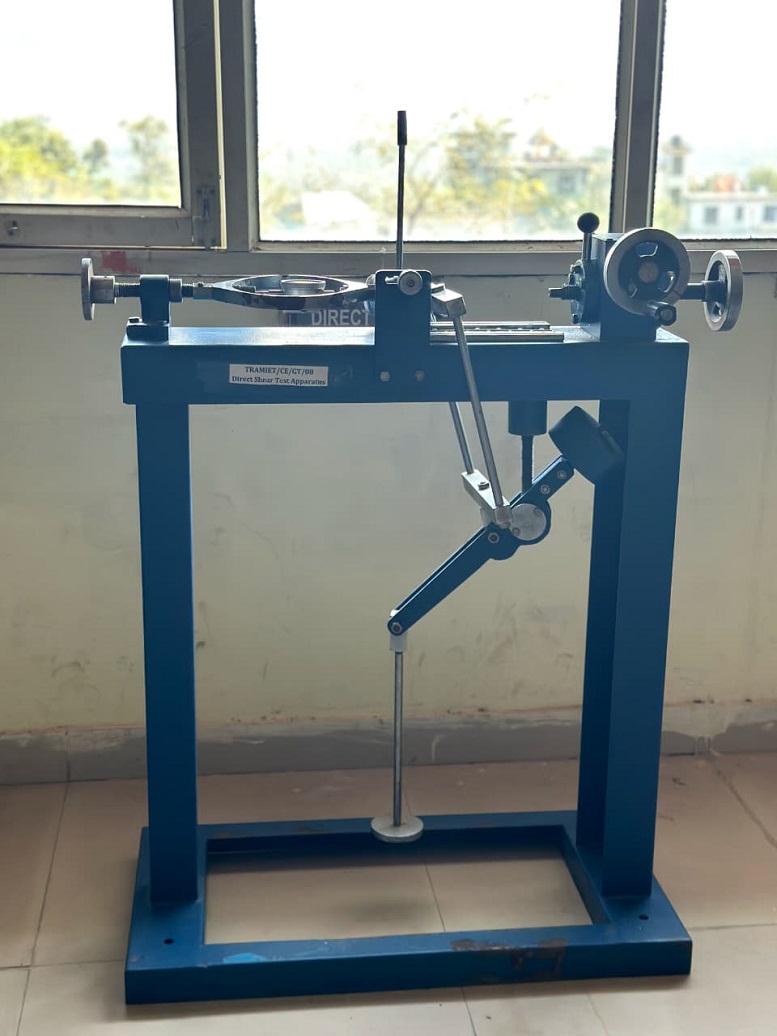
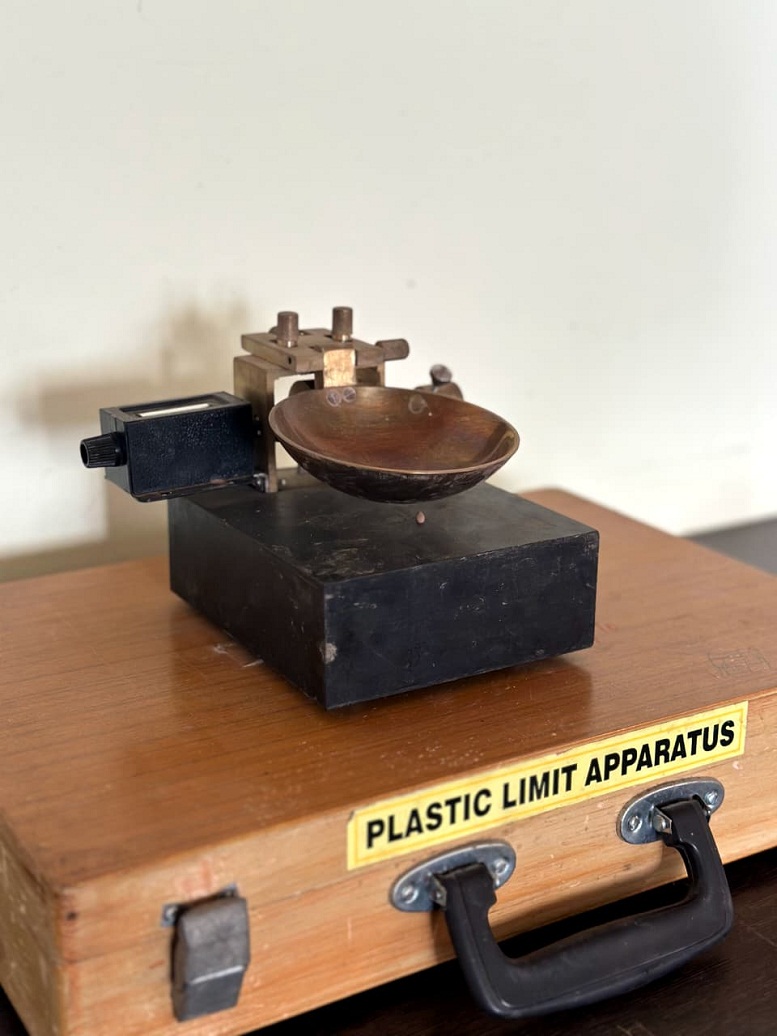
(Click any image to view the full size in a new tab)
3. Transportation Laboratory
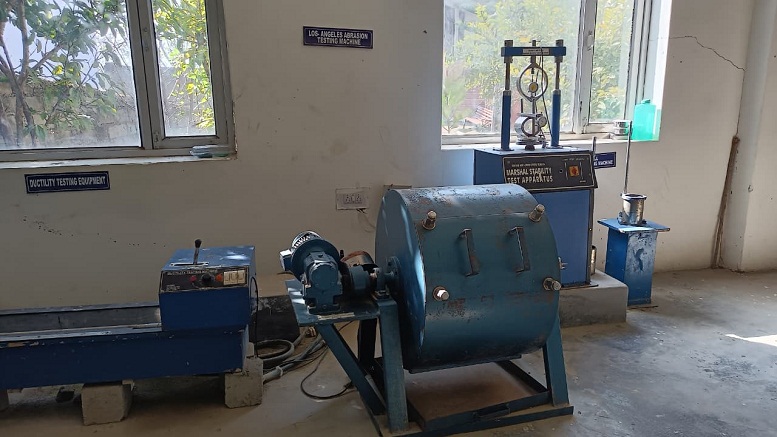
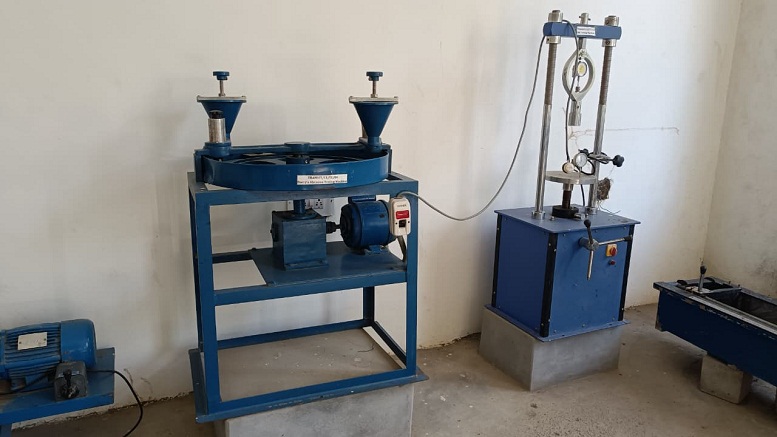
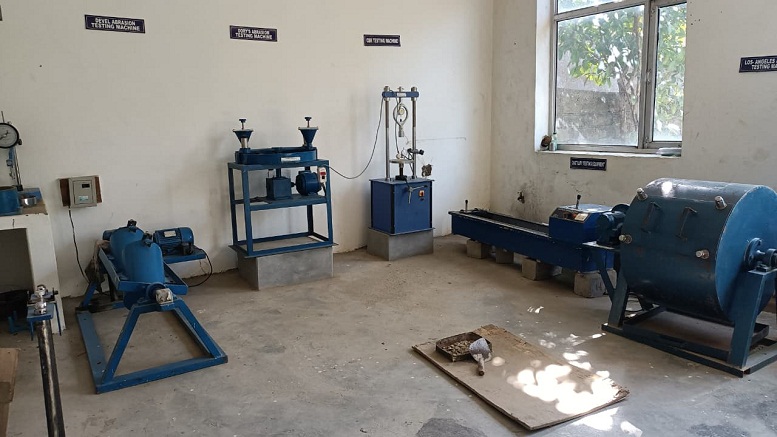
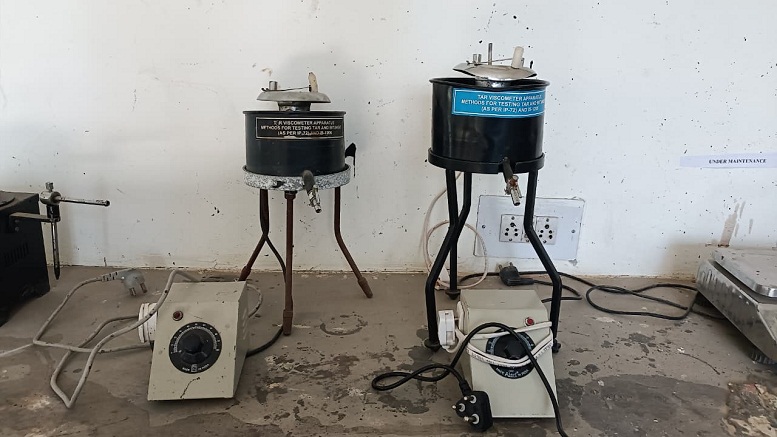
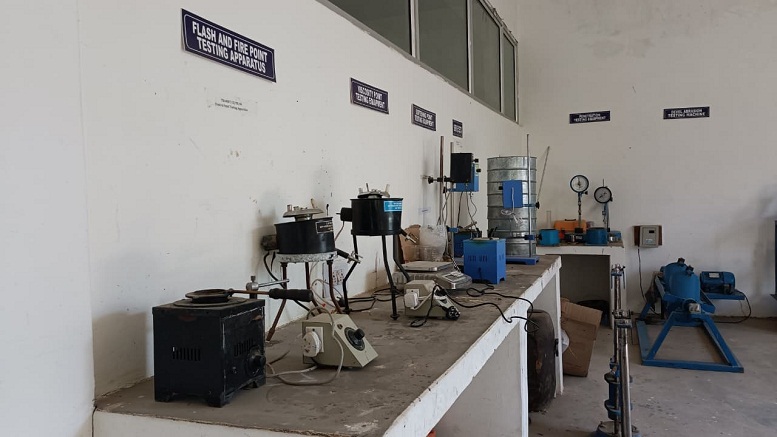
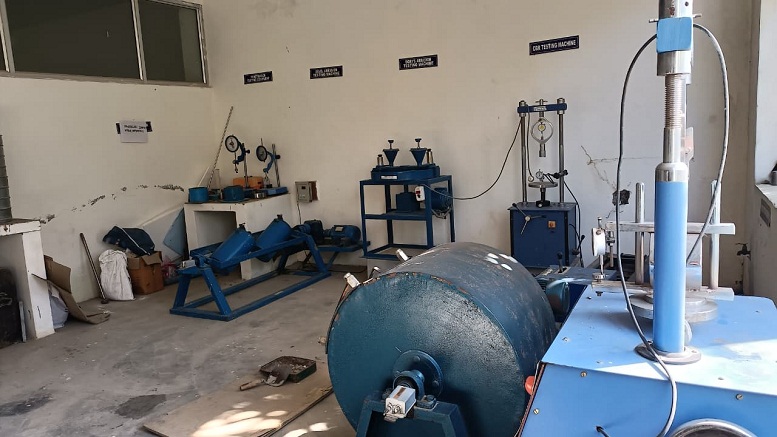
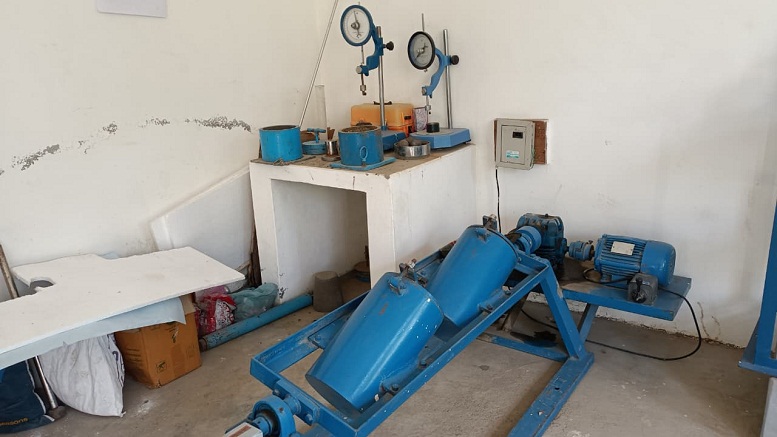
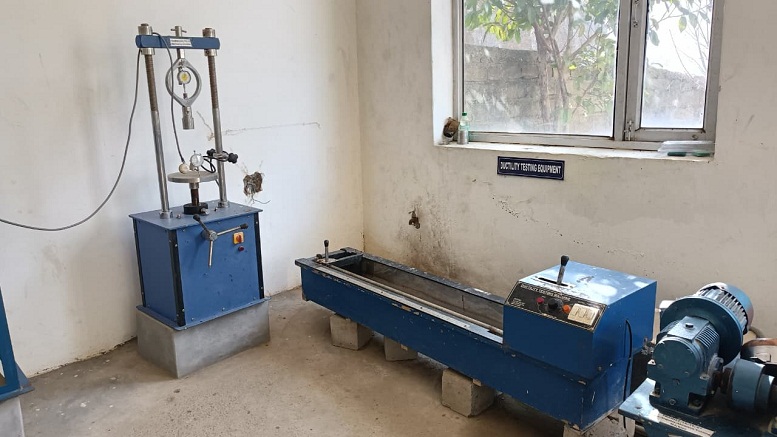
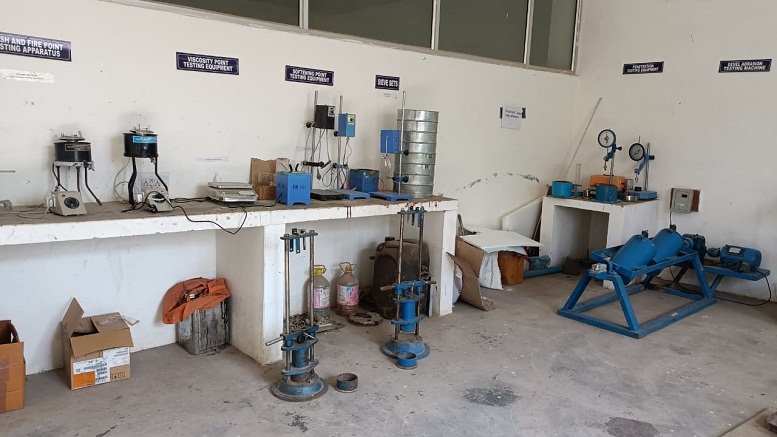
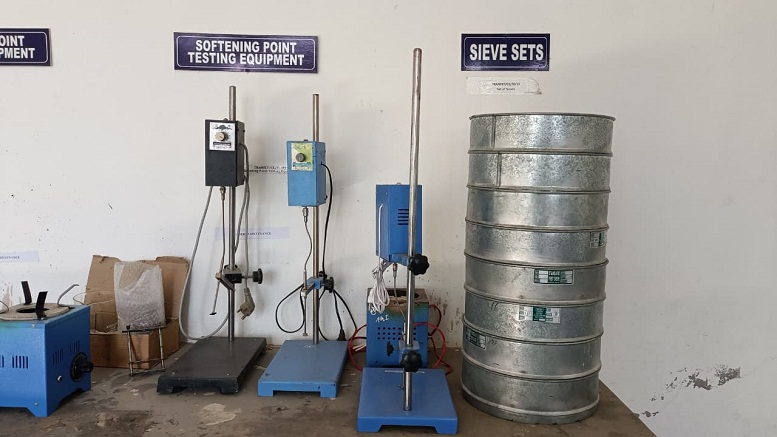
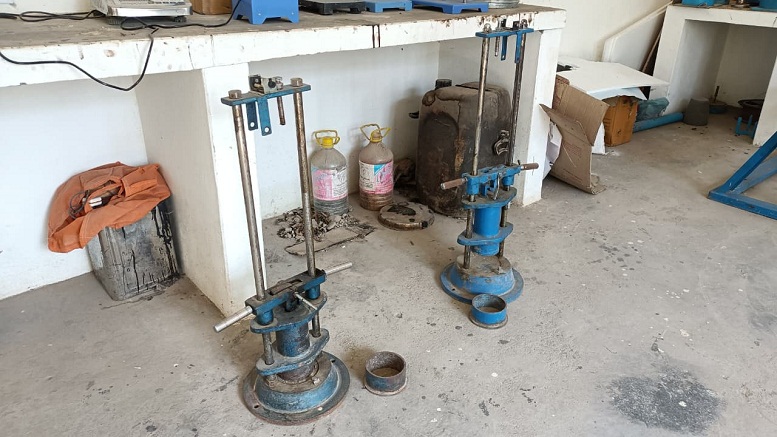
The Transportation Laboratory is a well-equipped facility dedicated to the study and testing of materials, components, and systems used in transportation infrastructure. The lab offers comprehensive practical training in pavement material testing, traffic flow analysis, geometric design, and transportation planning to support the development of safe and efficient roadways and transit networks. Equipped with advanced instruments and simulation tools, the lab enables students and researchers to investigate the behavior of pavement materials under various loads and environmental conditions. It also supports innovative research focused on sustainable transportation solutions, traffic management strategies, and infrastructure durability to meet the challenges of modern urban and rural transport systems.
Objectives include:
- Study of Materials Used in Transportation: Testing and analyzing the physical properties of materials like bitumen, aggregates, concrete, and asphalt used in road construction and pavements.
- Design and Performance Evaluation: Understanding the behavior of materials and structures under different loading conditions, traffic stresses, and environmental factors.
- Traffic Analysis: Conducting experiments to analyze traffic flow, congestion, road safety, and the effectiveness of various traffic control devices (e.g., signals, signs, road markings).
- Pavement Design: Studying pavement design and analysis techniques, including flexible and rigid pavements, to ensure durability and performance under traffic loads.
- Sustainability in Transportation: Learning about the role of eco-friendly materials and design approaches in reducing the environmental impact of transportation systems.
Outcomes:
1. Practical Skills and Knowledge:
- **Materials Testing:** Students gain hands-on experience in testing materials commonly used in transportation infrastructure, such as:
- Bitumen Testing (for asphalt mix design) ,
- Aggregate Testing (for gradation, strength, and durability),
- Concrete and Asphalt Mix Design (for road pavements),
- Compaction and Moisture Content Testing (to ensure proper material compaction for roadbed stability).
- **Pavement Analysis:** Students will be able to design pavements based on traffic loads, sub grade conditions, and environmental factors, ensuring long-term durability and cost-effectiveness.
2. Traffic Flow and Safety:
- **Traffic Analysis:** Exposure to traffic flow analysis techniques enables students to evaluate congestion, capacity, and efficiency of road networks. They learn to assess traffic patterns and propose solutions to improve traffic management. [Image of Traffic Flow Diagram]
- **Road Safety:** Students will understand road safety principles and design techniques such as the placement of signs, road markings, and barriers, and their effectiveness in reducing accidents.
3. Design and Evaluation of Transportation Systems:
- **Road Design and Geometric Design:** Understanding the principles behind designing safe and efficient road geometry, including alignment, cross-section, and grading, to accommodate traffic flow and safety.
- **Pavement Performance Evaluation:** Students evaluate the long-term performance of different types of pavements (flexible vs. rigid) under various traffic and environmental conditions.
4. Environmental and Sustainability Considerations:
- **Sustainable Materials:** Students are introduced to eco-friendly alternatives such as recycled materials (e.g., recycled asphalt) and low-impact design techniques that reduce the carbon footprint of transportation infrastructure.
- **Impact of Transportation on the Environment:** They explore the environmental impacts of road construction, such as soil erosion, air pollution from traffic, and water runoff, and study mitigation strategies.
Transportation Gallery
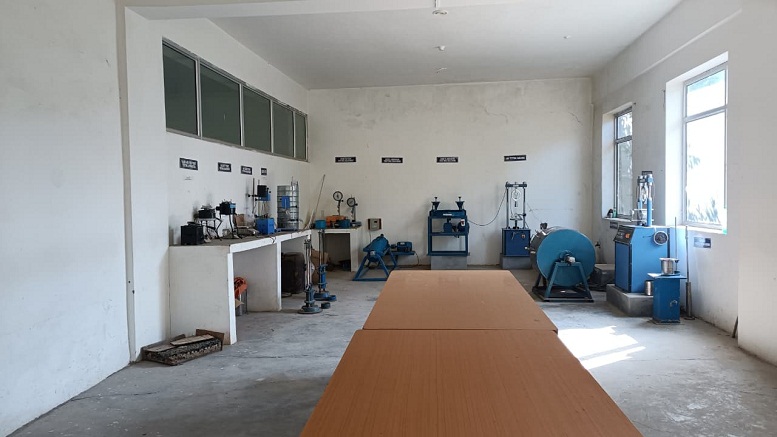
Transportation
Transportation
Transportation
Transportation
Transportation
Transportation
Transportation
Transportation
Transportation
Transportation
Transportation
Transportation
(Click any image to view the full size in a new tab)
4. CAD Laboratory
The CAD Laboratory is a well-equipped facility aimed at providing comprehensive training and practical experience in computer-aided design and drafting technologies for civil engineering and related disciplines. The lab features the latest versions of industry-standard software and high-performance computing systems, enabling students to create detailed 2D drawings and complex 3D models with precision and efficiency. This laboratory serves as a critical learning environment where students develop skills in architectural design, structural detailing, and infrastructure modeling. It supports a wide range of applications including structural analysis visualization, construction management planning, and Building Information Modeling (BIM), allowing users to simulate real-world engineering projects in a virtual space .In addition to hands-on training, the CAD Lab encourages research and innovation in design automation, parametric modeling, and digital fabrication techniques. It prepares students and researchers to meet the evolving challenges in engineering design by integrating advanced technologies and collaborative workflows used in modern construction and infrastructure development.
Objectives include:
- Familiarizing Students with CAD Software: Providing hands-on training in industry-standard software like AutoCAD, Civil 3D, Revit, and other CAD tools commonly used in civil engineering.
- Design and Drafting: Teaching students to create detailed 2D and 3D drawings, plans, and layouts for civil engineering structures, including buildings, roads, and utilities.
- Modeling and Visualization: Enabling students to develop 3D models and simulations of infrastructure projects, improving their ability to visualize the final product and evaluate its feasibility.
- Efficient Design Modification: Demonstrating how CAD software allows quick revisions and updates to designs, helping engineers save time during the design process.
- Integration with Other Tools: Teaching students to integrate CAD drawings with other engineering software (e.g., structural analysis software, GIS, BIM) for a more comprehensive design approach.
- Accuracy and Precision: Ensuring students understand the importance of precision in civil engineering drawings, and how CAD software enhances accuracy in measurements, scale, and proportions.
Outcome:
1. Technical Proficiency in CAD Software:
- Software Skills: Students will gain proficiency in industry-standard CAD software such as AutoCAD, Revit, Civil 3D, and STAAD Pro, allowing them to create professional-level designs and drawings.
- 2D Drafting: Students learn to draft technical drawings like floor plans, sections, elevations, and construction details in 2D, a core skill in civil engineering projects.
- 3D Modeling: Students will be able to create 3D models of structures and infrastructure projects, which help in visualizing the project and making informed design decisions.
2. Improved Design Efficiency:
- Speed and Accuracy: By using CAD tools, students can draft designs faster, modify them with ease, and achieve a higher degree of accuracy compared to manual drafting methods.
- Error Reduction: CAD software reduces human errors in drawing measurements, line spacing, and alignment, which is critical in construction projects where precision is essential.
3. Design Optimization:
- Feasibility and Optimization: Through 3D modeling and simulations, students can analyze and test design concepts before finalizing them, leading to more efficient and optimized structures.
- Collaboration: Students learn how to create drawings that can easily be shared and collaborated on with other engineering disciplines, architects, and stakeholders, promoting teamwork in multidisciplinary projects.
4. Knowledge of Industry Standards:
- Standards and Conventions: Students become familiar with the technical standards and conventions followed in the civil engineering industry for drawing symbols, annotations, line types, and layout.
- Code Compliance: Students learn how to design structures that adhere to local building codes and regulations, ensuring that their CAD drawings are not only accurate but also legally compliant.
5. Integration with Structural and Other Engineering Disciplines:
- BIM (Building Information Modeling): In advanced courses, students may be introduced to BIM tools like Revit or Civil 3D, which enable them to integrate CAD drawings with structural, mechanical, and electrical systems, creating a comprehensive model of the entire construction project.
- Multi-Disciplinary Collaboration: The integration of CAD with other engineering tools allows for a seamless flow of data between civil, structural, and architectural designs, improving overall project coordination.
5. SURVEYING LAB
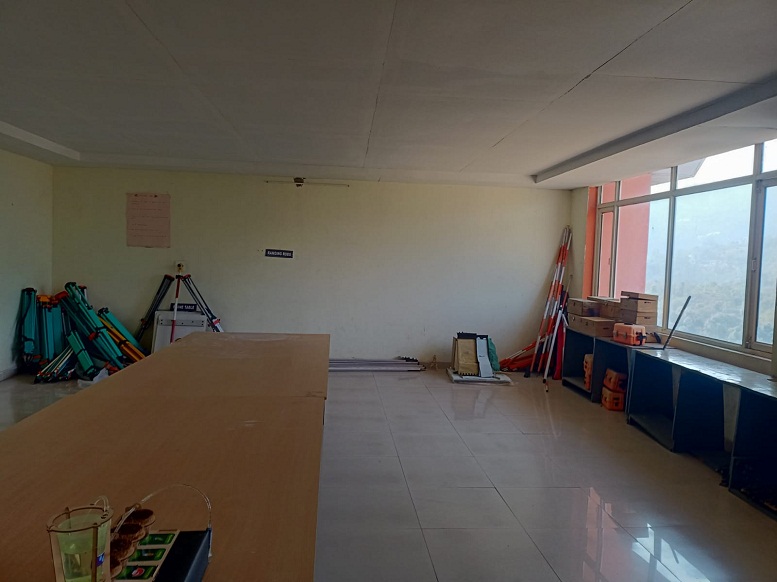
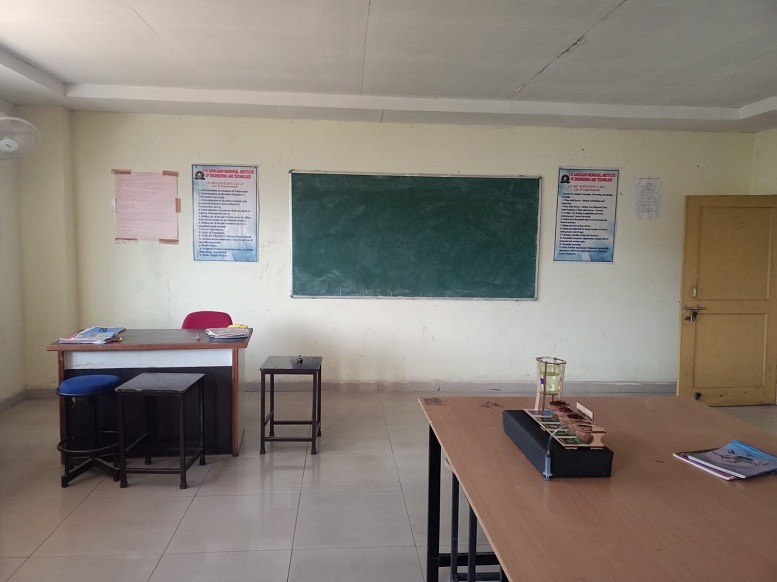
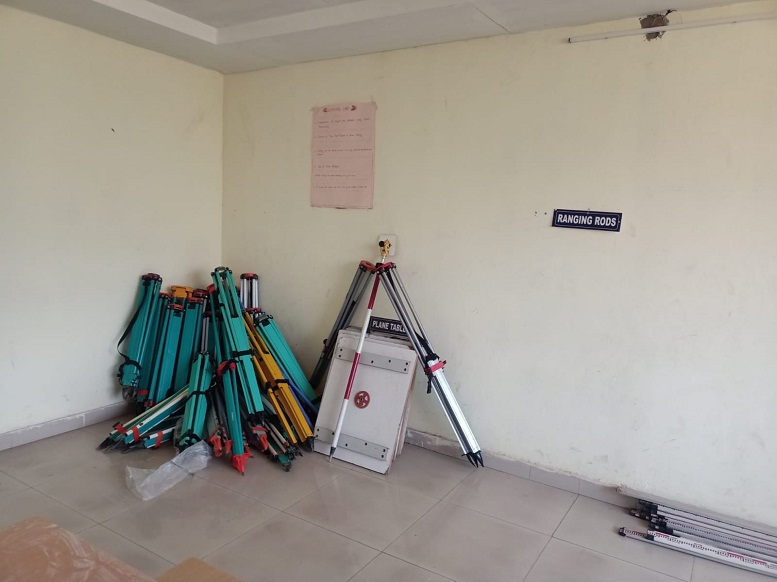
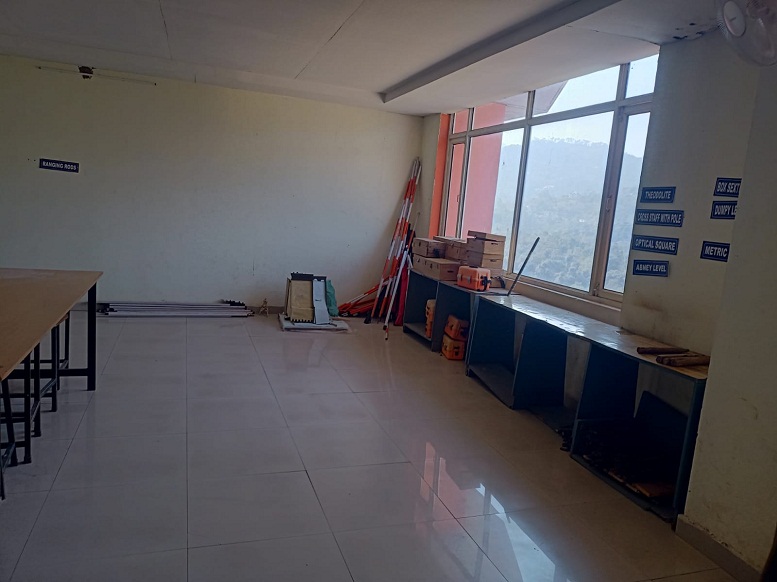
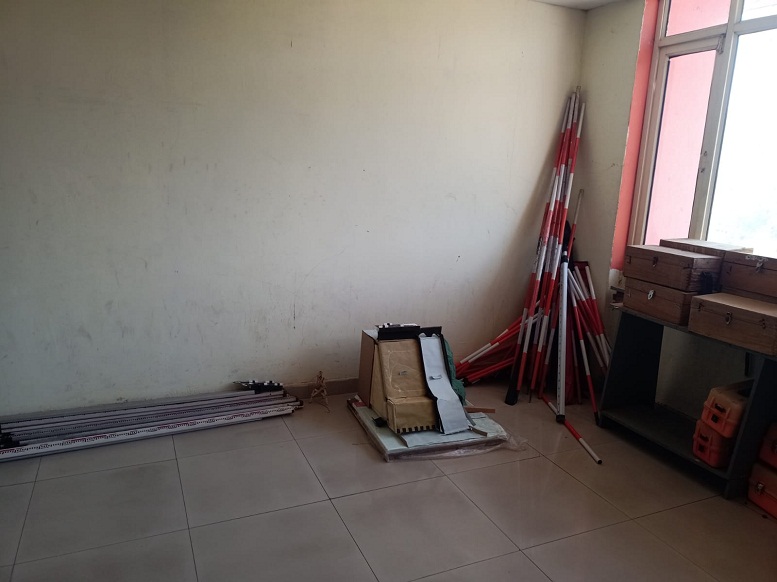
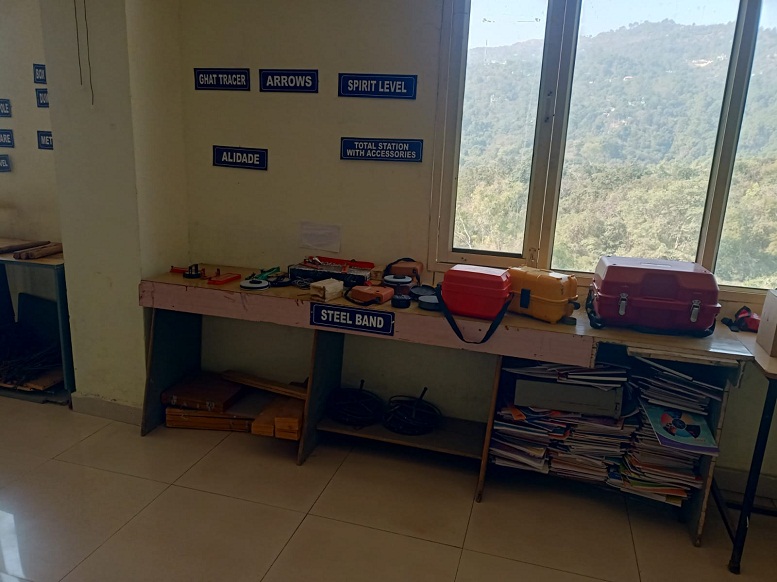
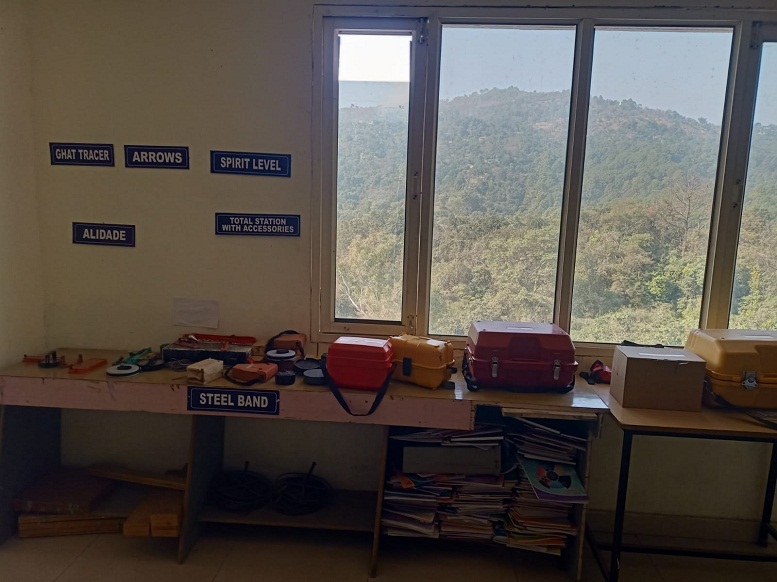
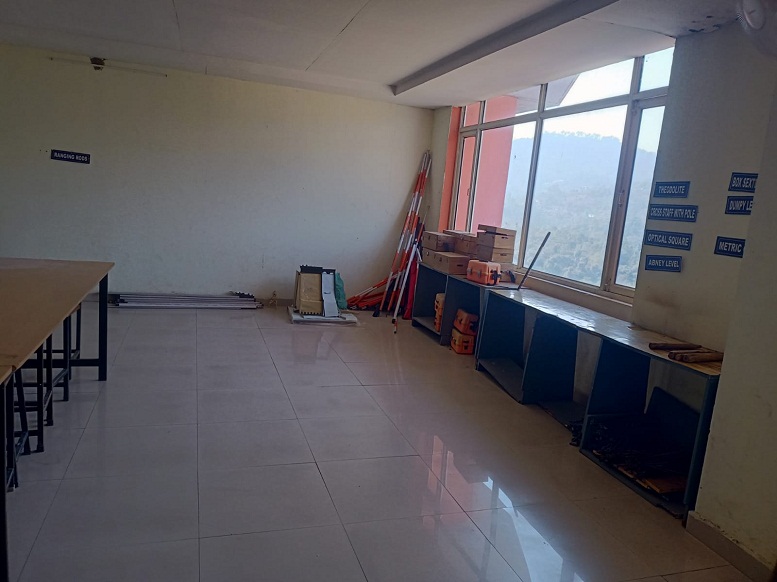
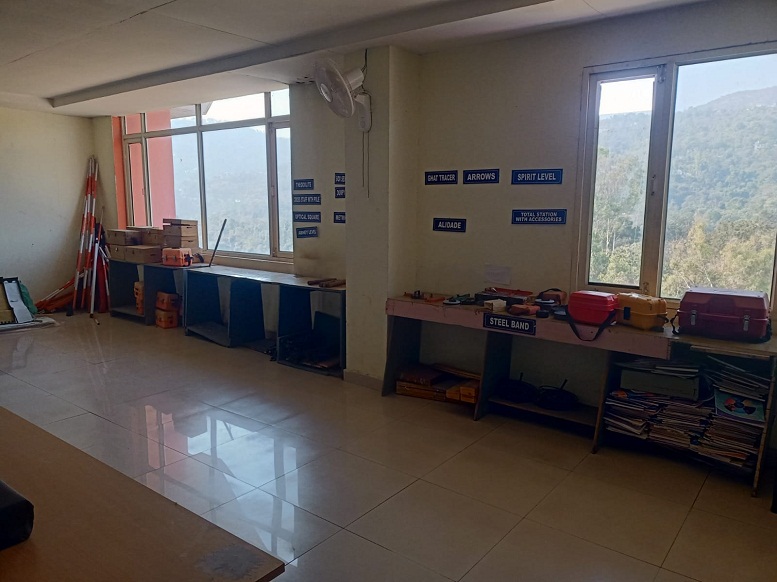
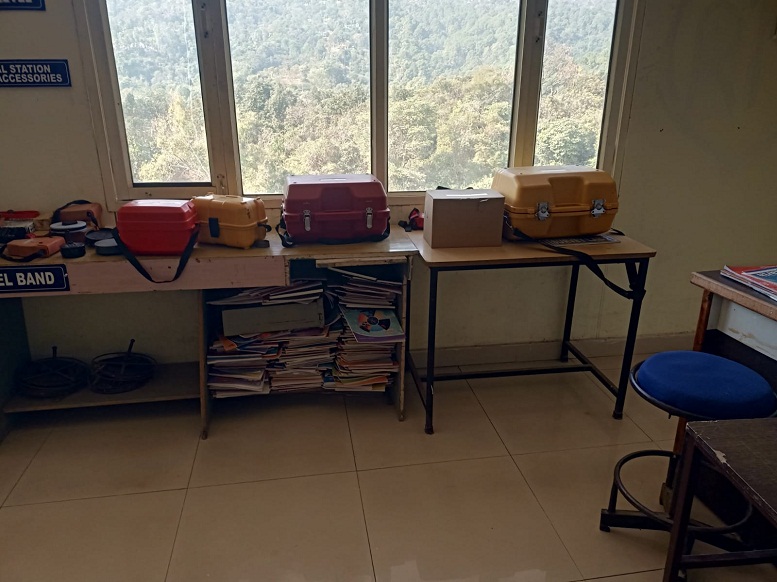
DescriptionThe Surveying Laboratory is designed to provide practical knowledge and gives experience in various surveying methods used in Civil Engineering. It helps student to understand the principles, instruments, and techniques required for accurate measurement, contouring and mapping of land.
In this lab, Students perform different types of survey such as chain survey, compass survey, leveling, plane table survey, theodolite survey, total station survey. The lab work includes measurement of distance, angles and elevations, preparation of maps and plans, and computation of areas and volumes.
The laboratory is equipped with instruments like chains, tapes, compasses, dumpy levels, auto levels, plane tables, theodolite, total stations, and GPS receivers. These instruments are used to simulate real-world surveying tasks and improve the students technical and field skills.
The main objective of the lab is to make students experienced in
- Using modern and traditional surveying instruments.
- Conducting field surveys with accuracy.
- Preparing topographical maps and plans.
- Understanding errors and applying corrections in measurements.


5. REMOTE SENSING AND GIS LABORATORY
IntroductionThe Remote Sensing and GIS Laboratory is an essential part of civil engineering and geospatial studies. It provides practical exposure to modern tools and techniques used for acquiring, processing, analysing, and managing spatial data about the Earth’s surface.
In this laboratory, students learn how to use satellite images, aerial photographs, and geographic information system (GIS) software to extract meaningful information for various engineering and environmental applications. The lab bridges the gap between field data and digital mapping technologies, enabling students to visualize and analyse real-world geographic phenomena.
Remote sensing involves collecting information about the Earth’s surface without direct contact, using satellites or aircraft sensors. GIS, on the other hand, is a computer-based system used for capturing, storing, analyzing, and displaying spatial (location-based) data. Together, Remote Sensing and GIS provide a powerful platform for mapping, monitoring, and managing natural and built environments.
This laboratory helps students develop practical skills in :-
- Image interpretation and analysis
- Map preparation and data digitization
- Geo-referencing and spatial database creation
- Integration of remote sensing data with GIS tools
Through various experiments and projects, the lab enhances students understanding of spatial data handling and its applications in civil engineering, urban planning, environmental management, disaster monitoring, and resource mapping.
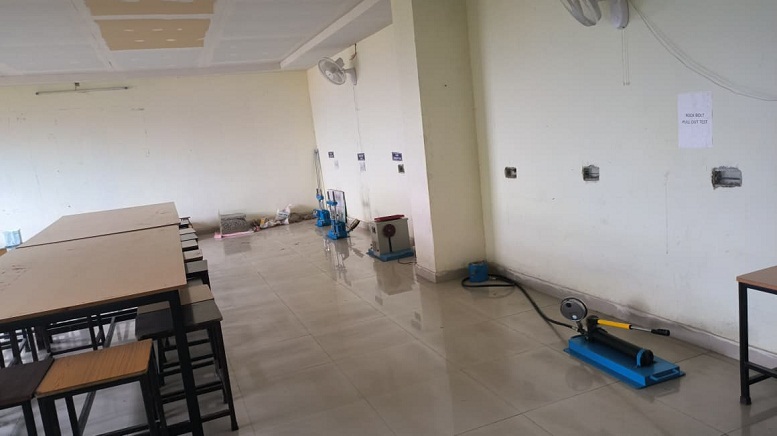
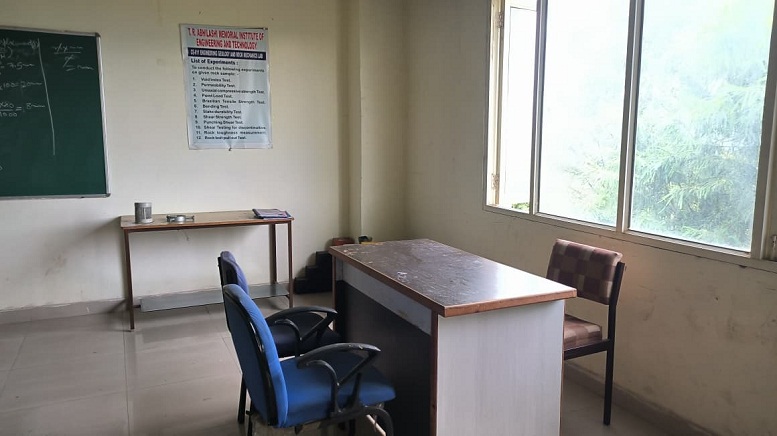
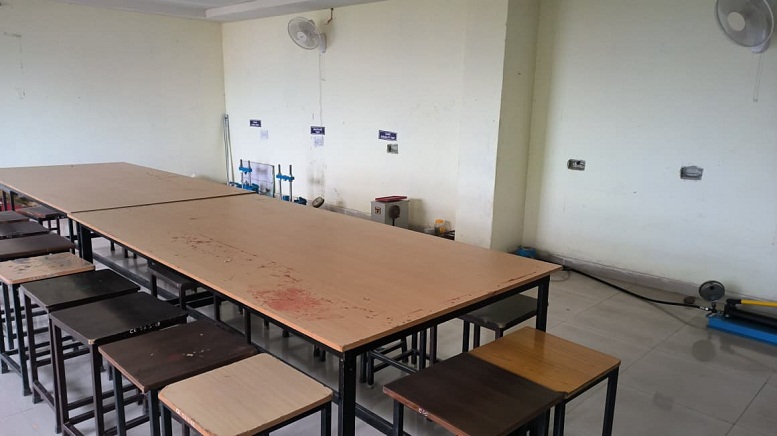
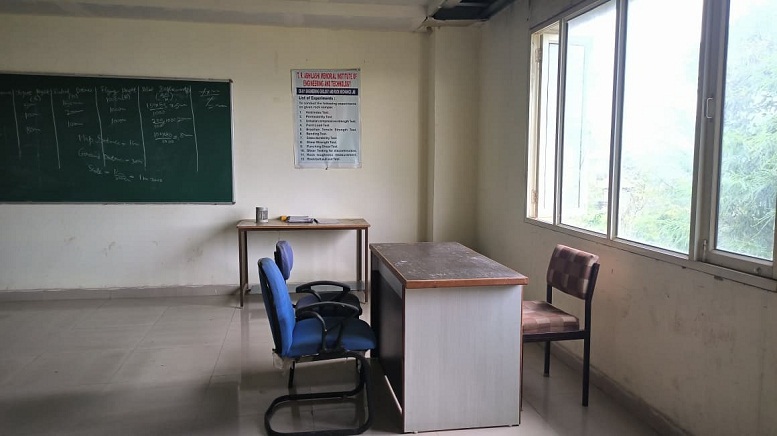
6. Project Engineering Lab.
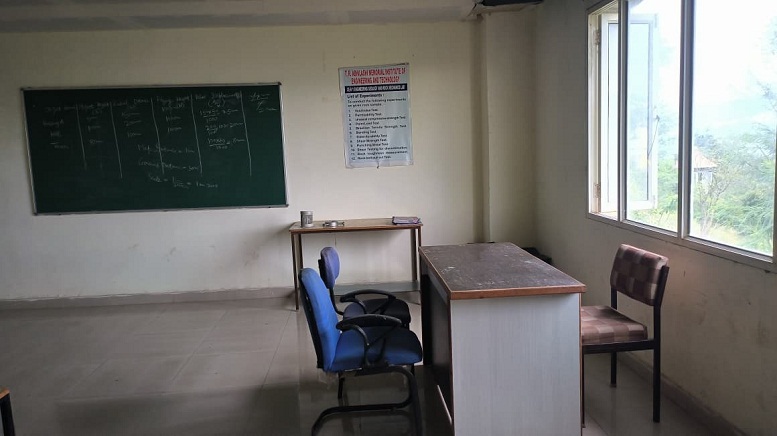
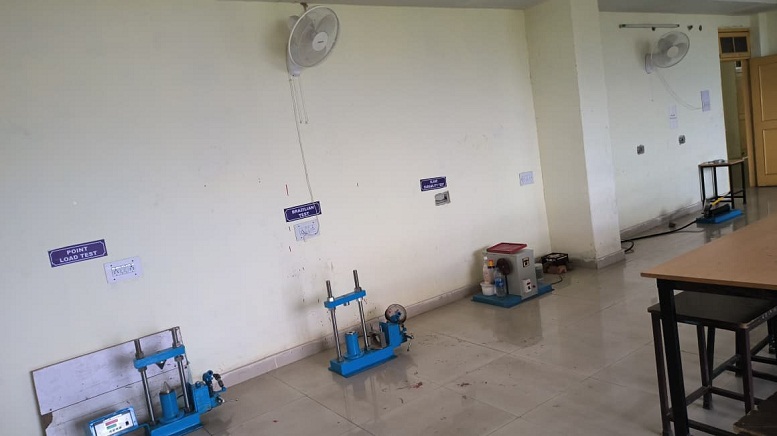
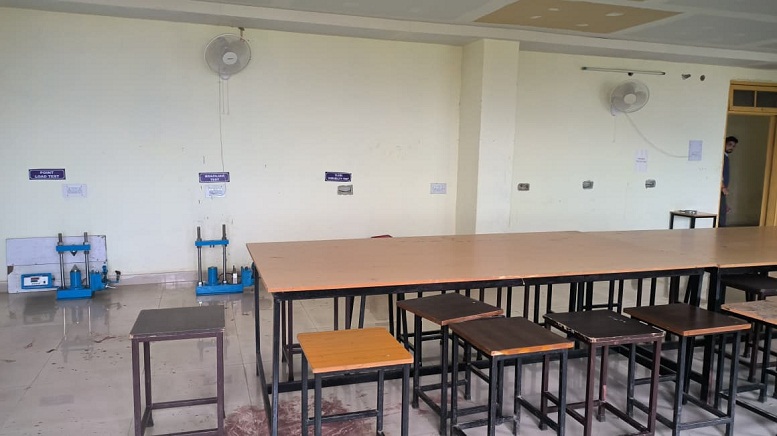
Civil Engineering is the planning, design, execution, and management of infrastructure projects such as buildings, bridges, roads, dams, water supply systems, and other public works.Project Engineering Lab. deals with
1. To plan and design safe, economical, and sustainable structures.
2. To manage time, cost, and resources effectively.
3. To ensure quality control during construction.
4. To coordinate between clients, engineers, contractors, and workers.
7. Mechanics of Fluid Lab
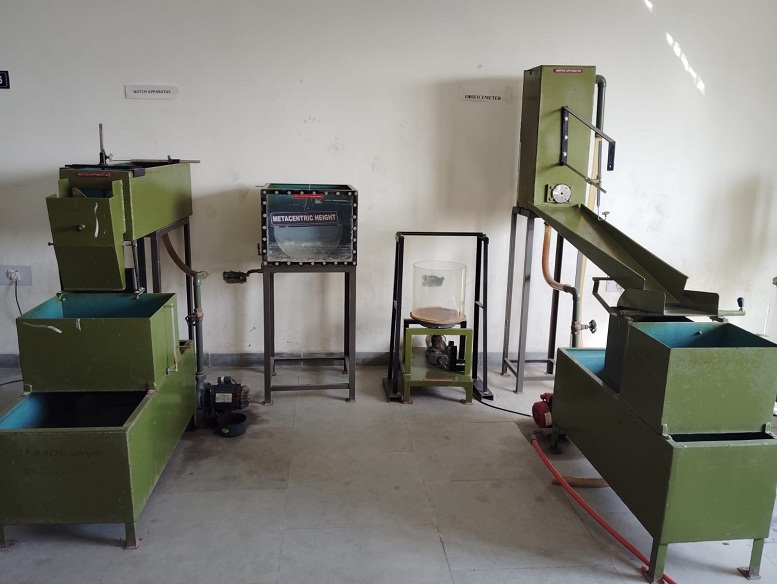
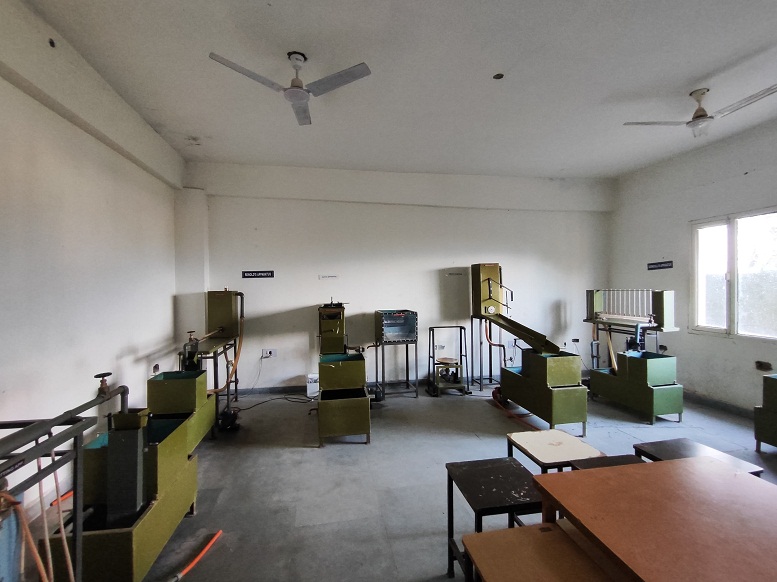
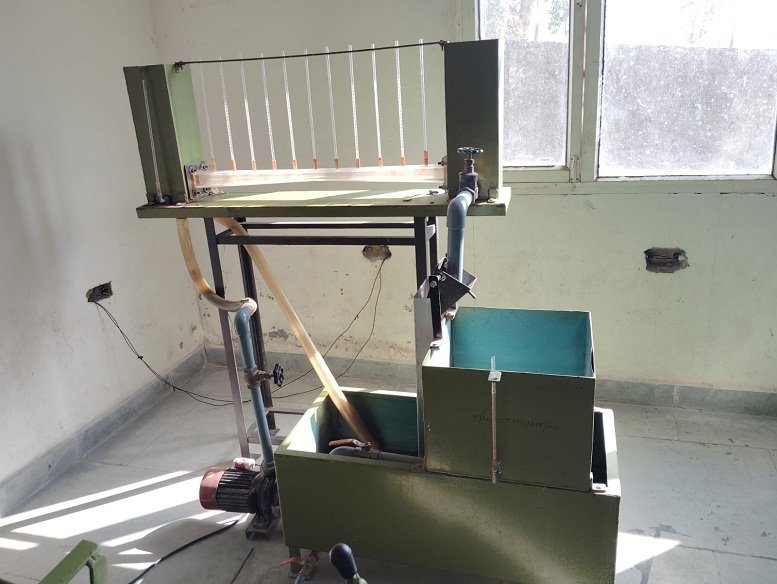
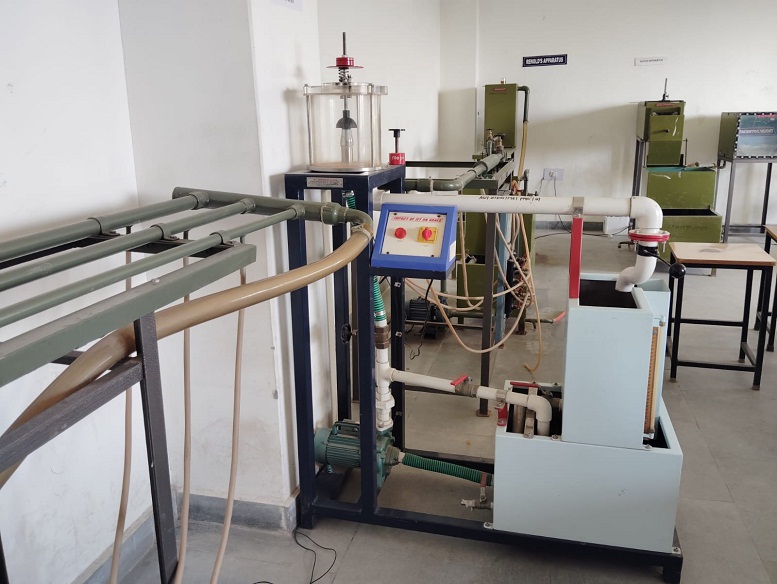
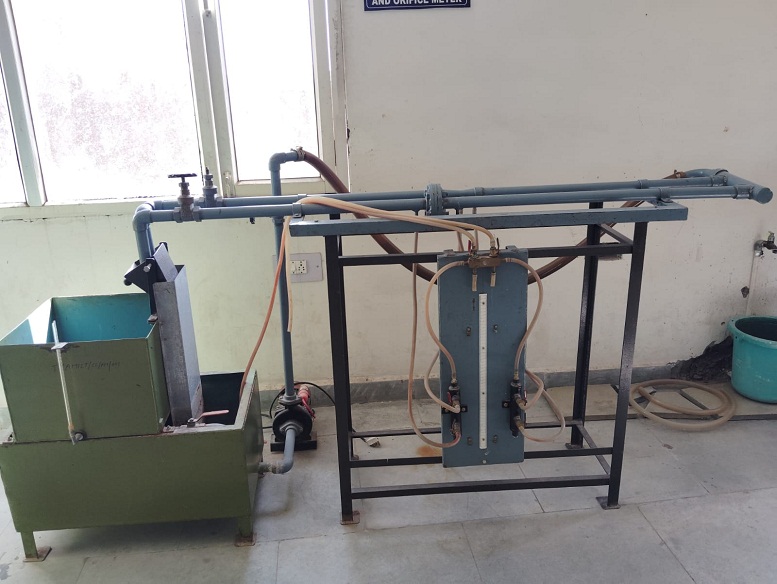
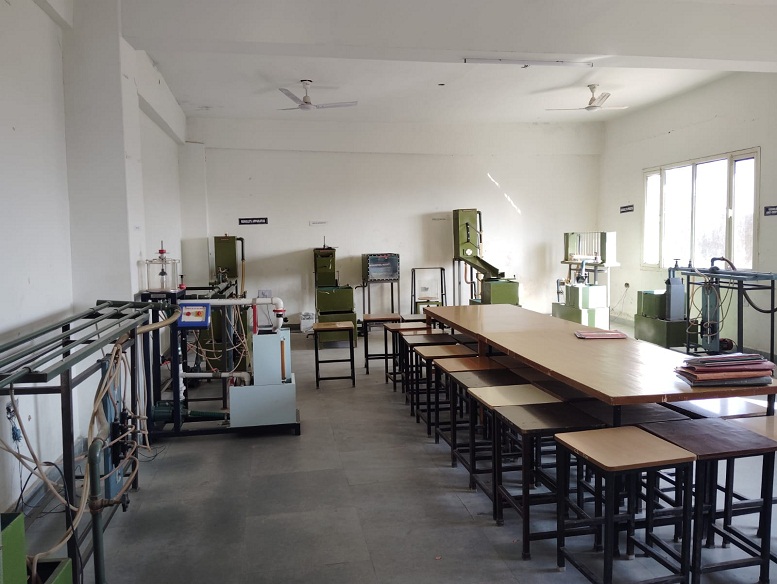
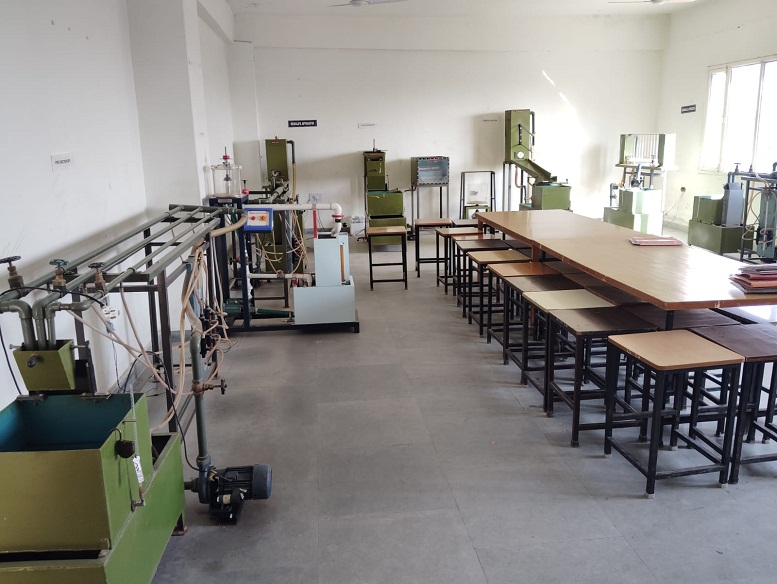
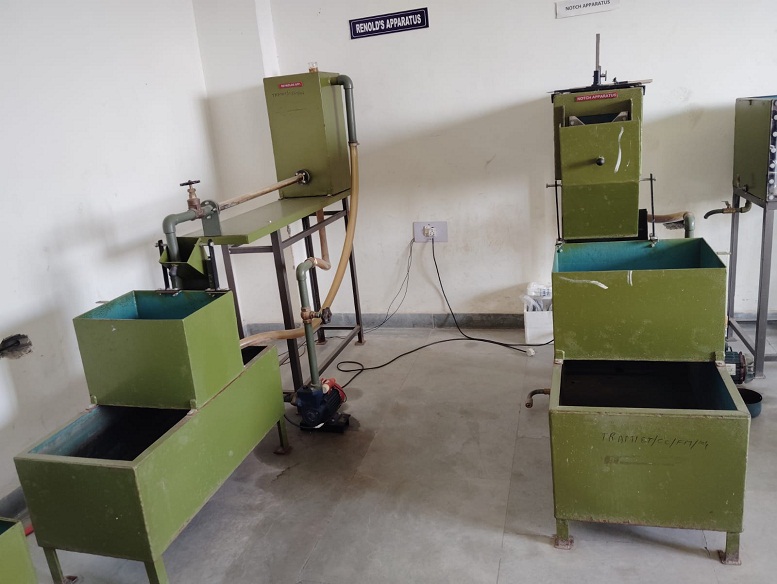
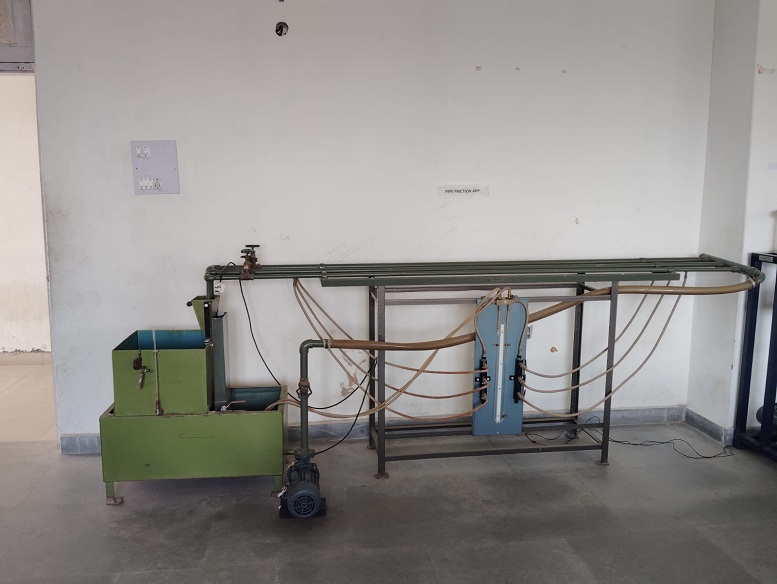
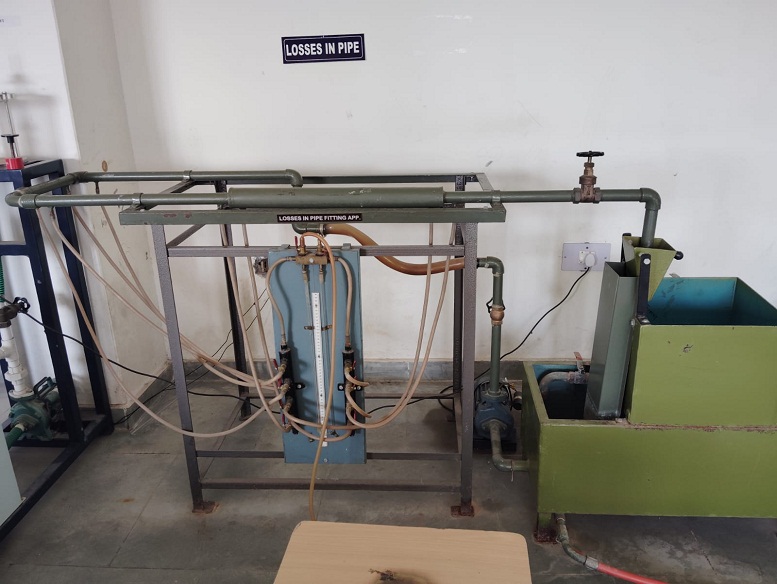
The Mechanics of Fluids Laboratory provides practical understanding of the behavior of fluids at rest and in motion. It helps students verify fundamental principles such as Bernoulli’s theorem and study flow through pipes, orifices, and channels. The lab is equipped with devices like the Venturimeter, Orificemeter, Reynolds Apparatus, and Pipe Friction setup. Through various experiments, students learn to measure flow rate, pressure, viscosity, and head loss. This laboratory bridges the gap between theoretical concepts and real-world fluid applications in engineering systems.
The Mechanics of Fluids Laboratory is an essential part of engineering studies that helps students understand the fundamental concepts of fluid behavior through practical experiments. It provides hands-on experience in verifying the principles of fluid mechanics and measuring important fluid properties.
In this lab, students study the characteristics of fluids at rest and in motion, analyze pressure and velocity distribution, and learn about flow through pipes, orifices, and channels. The experiments help relate theoretical knowledge to real-world engineering applications such as hydraulic systems, pipelines, and water supply networks.
Objectives:
- To understand the basic principles of fluid statics, kinematics, and dynamics.
- To determine various fluid properties such as density, viscosity, and pressure.
- To verify important laws such as Bernoulli’s theorem and continuity equation.
- To study energy losses due to friction and fittings in pipes.
- To develop experimental, analytical, and data interpretation skills.
Major Equipment:
- Bernoulli’s Apparatus – to verify Bernoulli’s theorem.
- Reynolds Apparatus – to study types of flow (laminar, transitional, turbulent).
- Venturimeter and Orificemeter – to measure discharge and flow rate.
- Orifice and Notch Tank – to determine flow over notches and through orifices.
- Pipe Friction Apparatus – to measure head loss due to friction in pipes.
- Metacentric Height Apparatus – to determine stability of floating bodies.
- Viscosity Measuring Apparatus – to measure fluid viscosity.
Learning Outcomes
After performing the experiments, students will be able to:- Understand fluid properties and flow behavior.
- Apply fluid mechanics principles to practical engineering problems.
- Venturimeter and Orificemeter – to measure discharge and flow rate.
- Measure and analyze pressure, flow rate, and head loss accurately.
- Visualize flow patterns and understand energy transformations in fluid motion.